“…the Constitution, baseball and jazz music. They’re the three most beautiful things Americans have ever created.” – Gerald Early
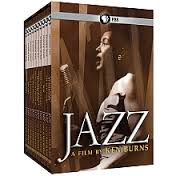
Jazz is one of Ken Burns’ best documentary films. Like most of his work the series transcends being solely a factual historical record. Burns puts the facts into historical and social context. Jazz, the documentary, fits the evolution of Jazz music in with American culture, Black History, people and politics of the United States. The history of Jazz, it turns out, is born out of circumstances uniquely American, to a large extent, in New Orleans of the 1890’s. Jazz — “It is a creation of the African-American community there, but incorporates all kind of music heard in the streets of what was the country’s most cosmopolitan city.” Jazz soon moves out of New Orleans and becomes a national passion. This documentary will either introduce you to Jazz or increase your appreciation and enjoyment of this music.
Documentary films come in many forms, evolving from the simple recording and editing of events to hybrid styles that incorporate fictional recreations of events. Ken Burn’s documentaries do not recreate events using actors. Instead he incorporates, often meticulously restored or discovered, archival photographs, film and documents, to create a narrative structure.
Ken Burns has created his own documentary niche. His forte is historical documentaries that delve into American culture and life since the Civil War. According to Erik Barnouw, in History of Non-fiction Film, Ken Burns is the only Documentary Filmmaker ever invited to be a member of the Society of American Historians. “Burns was the first ever elected without having written a book. Recognition of documentary as a medium for the writing of history.” –Barnouw
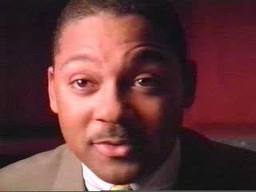
In the opening minutes of Episode One, musician Wynton Marsalis states, “Jazz music objectifies America. It’s an art form that can give us a painless way of understanding ourselves. The real power of Jazz, the innovation of jazz, is that a group of people can come together and create art, improvised art and can negotiate their agendas with each other, and that negotiation is the art.” Other interviews or commentary throughout the documentary by, Albert Murray, Gary Giddens, Stanley Crouch, Gerald Early and others give ongoing narration.
The story begins by introducing the environment, politics and culture of the day, then exploring how it all got that way. Individual artists are highlighted against the backdrop of their world. There are dozens of parallel themes that weave their way though this documentary. One theme, that also exists in other documentaries, like Civil War and Baseball by Burns, is the ongoing, vitriolic backdrop of race relations and racism in America. The documentary does not ignore racial segregation and the way black musicians were treated in America.
Another theme is the history of the country and the world to some extent. The major theme, of course, is exploring Jazz music; although some critics’ feel the documentary isn’t inclusive enough of all who contributed. Despite this possibility, Jazz does a great job introducing those interested in music to the subject and wetting appetites for more. Documentary films are visual and always subject to holding the viewer’s attention. Books can be read at any pace. Unlike a history book, of unlimited length and verbose explanations, a documentary film must be succinct, keep pace and fit into a time frame from which most people will view it. Music historians, experts and professors would do well to consider this as a documentary film intended for all audiences, not a history book. Even nineteen hours is not enough to cover the history of Jazz completely.
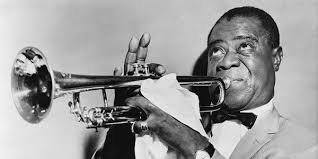
Film and video are, primarily, a visual mediums. More recently sound has become a more equal partner in telling the story in film and video. However, the medium is still dominated by the visual part of the presentation. A contemporary viewer/listener can see and hear at the same time, absorb, understand and appreciate the visual/audio gestalt. As tempting as it might be, filmmakers do not have the luxury, in a documentary about music, to hold a picture or a blank frame, for the music to play for three minutes, so the composition can be listened to exclusively.
Ken Burns’ documentaries are notoriously long. At ten episodes, the total running time for Jazz is about 19 hours. But each of the ten episodes moves along at a good pace. Listening to Jazz, hearing Jazz artists and others talk about Jazz is not difficult. Perhaps because the music is so vibrant, the documentary often feels like a music video with actuality footage. There’s a lot to be learned here not only about Jazz but also about the America it evolved in and in-turn helped shape.
Jazz was aired on PBS in the year 2000. It reportedly cost $13,000,000 to make. That’s an average of $1,300,000 per, roughly ninety minute to two-hour, episode. In true Ken Burns, and traditional documentary style, there are no actors hired to recreate historic events. Historic archival photographs, film or video footage, interviews and voice-over narration by interviewees, historians and others are the basis for the story. It is well-edited and paced. You probably won’t “binge watch” all nineteen hours and that’s good, because there is a lot to enjoy, and think about. As Ken Burns has said, “meaning accrues in duration.” So take your time, enjoy and learn.
When Ken Burns said, “meaning accrues in duration,” he was originally referring to an editing style that usually takes its time. In the case of Jazz the editing pace is driven by the music, (497 pieces of music) which makes things feel like they are moving faster. There are times when it does seem the theme is digressing a bit too much into the context side of the story of Jazz, but not very often. Jazz both entertains and informs on many levels. The documentary offers a wonderful combination of music, and story. In the words of Ken Burns, “[Jazz] is the soundtrack of America.”
Ken Burns reflecting about his work in The Making of Jazz, a special short documentary on the first episode disc, mentions that he has spent a total 16 years of his life working on three films; Civil War, Baseball and Jazz. He mentions a quote by Gerald Early, “…when they study our civilization, two thousand years from now, there will only be three things that Americans will be known for: the Constitution, Baseball and Jazz music. They’re the three most beautiful things Americans have ever created.”
“And JAZZ is also a story about race and race relations and prejudice, about minstrelsy and Jim Crow, lynching’s and civil rights. JAZZ explores the uniquely American paradox that our greatest art form was created by those who have had the peculiar experience of being unfree in our supposedly free land. African-Americans in general, and black jazz musicians in particular, carry a complicated message to the rest of us, a genetic memory of our great promise and our great failing, and the music they created and then generously shared with the rest of the world negotiates and reconciles the contradictions many of us would rather ignore. Embedded in the music, in its riveting biographies and soaring artistic achievement, can be found our oft-neglected conscience, a message of hope and transcendence, of affirmation in the face of adversity, unequaled in the unfolding drama and parade we call American history. “ — Ken Burns
Trailer
Episodes
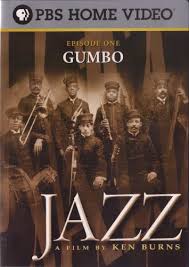
Episode One, 90 minutes, entitled Gumbo sets the stage for the birth of Jazz and traces the roots, music and culture that nurtured it in New Orleans. Some would dispute the notion that New Orleans was the exclusive “birthplace” of Jazz but the documentary makes a good case for New Orleans as the epicenter for the origins of Jazz. Wynton Marsalis and others add their personal, often profound, observations about Jazz including its evolution and artists. Even if you never watch the other nine episodes you will have a better understanding and feel for the roots of this American music form after watching this episode. It’s likely, however, that you will want to watch the rest of the story, especially, if you have a love of music and/or American history.

Episode Two, 120 minutes, entitled The Gift, captures the musical magic of this era and begins around the time of Prohibition, and a booming stock market. It introduces Louis Armstrong and Duke Ellington as well as Jazz development in Chicago and New York cities. Louis Armstrong’s life and his “gift” are explored. James Reiss Europe’s contribution to marching bands and Jazz music, set against the backdrop of WW1 and the African-American troops fighting in France. Duke Ellington’s Blessed beginnings in Washington DC. All of this at a time when Jim Crow practices and the Klu Klux Klan threatened minorities. This was a time when Jazz music was said to threaten the morals of young people dancing to the sound. By the end of Episode 2, Louis Armstrong brings his genius to Rose Land in NY City and Fletcher Henderson’s Band.

Episode Three, 120 minutes, entitled Our Language, Roaring Twenties, Prohibition, Bands and people who contribute to the evolution of Jazz. Bessie Smith and Ethel Waters sing the Blues, Bix Beiderbecke a white Cornet player from the Midwest, plays Jazz, Benny Goodman and Artie Shaw become a part of the scene. Dance bands with all white or black musicians play venues for all audiences in the mostly segregated world of the day. Duke Ellington played for white only audiences at the Cotton Club in New York City and is broadcast on radio all over the country. The Paul Whiteman Band became well-known. But in the end it’s Louis Armstrong’s amazing work that takes center stage. Armstrong along with Earl Hines record “West End Blues,” a truly classical piece of music, featuring Armstrong’s, Blues inspired, improvisational style.

Episode Four, 120 minutes, entitled The True Welcome, goes from the twenties to the stock market crash in 1929, after which some said the Jazz age was over. Up until that time musicians like Louis Armstrong, Duke Ellington, Fats Waller, Fletcher Hendricks, and other had played for small, mainly black audiences. As radio broadcasting of music came in and started to broadcast life performances, first Duke Ellington from the Savoy, Jazz became popular. People started dancing to a form of Jazz called Swing. Ellington ushered in the “Big Band” sound and was soon followed by other bands. Louis Armstrong set the tone for Jazz in the 1930’s when he started doing “skat” singing along with his trumpet playing. His style was known as “Black and Blue.” Chick Webb, a drummer put together a band that played at the Savoy in Harlem. Soon Benny Goodman came along with his band and three-hour Radio Broadcast. This episode covers a range of musicians who made their mark on Jazz. John Hammon, Billy Rose, Art Tatem and Jelly Roll Morton to name a few in this episode. In 1933 Duke Ellington brings his band to Europe playing numbers like Mood Indigo. Europe embraces Ellington and Jazz.
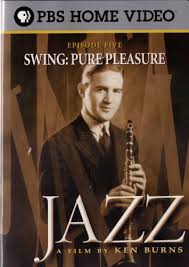
Episode Five, 90 minutes, entitled Swing Pure Pleasure, covers the mid 1930’s, Jazz goes mainstream with white musicians and bands. Benny Goodman, known as the “King of Swing,” Tommy Dorsey, Jimmie Lunceford, Glen Miller and Artie Shaw. Meanwhile Duke Ellington continues to builds in own sound and band. Louis Armstrong starts his band. Billie Holiday begins her career. At the end of this episode four thousand people come to the Savoy Ballroom in Harlem to see “The Music Battle of the Century,” a face off between Goodman and Chick Webb.

Episode Six, 105 minutes, Swing: The Velocity of Celebration, where two amazing Jazz tenor sax musicians emerge. Lester Young with own distinctive sound and Coleman Hawkins with his voice. In Kansas City Count Basie creates his own Jazz sound. Chick Webb, almost reluctantly, introduces Ella Fitzgerald to the world. Billie Holiday sings “Strange Fruit,” expressing her personal pain and indignation of racism in America. Duke Ellington tours Europe weeks before World War II begins.

Episode Seven, 120 minutes, Dedicated to Chaos, covers the Jazz world against the backdrop and chaos of World War Two. A lot is happening in music, from Charlie Parker’s improvisation and original approach on Alto Saxophone to the fact that 30 million Jazz music records were sold in 1940. “Swing” music and dancing were at a peak and big bands would go to war with the country. Louis Armstrong’s band toured the United States. Duke Ellington and his band had their own sound and style. Dizzy Gillespie trumpet is unforgettable. Billie Holiday sings Lady Day, Duke Ellington Orchestra performs his forty-four minute composition at Carnegie Hall with First Lady Elenore Roosevelt in attendance. Dave Brubeck talks about playing piano as a soldier in Europe. But when he returned to the US after the war his integrated band could not stay in the same hotel.

Episode Eight, 120 minutes, Risk, Charlie Parker’s genius is focused on as well as his tragic, short life. Parker and Gillespie invent a new Jazz sound called Bebop as Gillespie’s band tours the country. New artists, bringing new ideas, emerge including Miles Davis, Dave Brubeck, Gerry Mulligan and John Lewis. First International Jazz Festival held in Paris, 1949. Parker records an album called “Parker with Strings.” Bird Land, club named after Charlie “Bird” Parker, opened in New York City. In 1957, Miles Davis’s album, “Birth of the Cool,” made up of recordings from the late 1940’s, was released by Capitol records, establishing Davis and his music to a wide audience.

Episode Nine, 120 minutes, The Adventure, Jazz takes on different styles “the definition of what was Jazz and what was not began to blur.” Matt Glaser, musician states, “ When we talk about music, the reason we use terms that sound vague is not because there is anything vague about music, but because music expresses human experience so specifically, in such specific ways, that when you use language to describe that the words fall short…” In episode nine Charlie Parker’s career is ended by Heroin addiction. Miles Davis records on Prestige label with many well-known artists of the fifties and sixties. Clifford Brown establishes a no drugs life style. Sara Vaughn sings. In 1957 Louis Armstrong sees Little Rock disaster and refused to go on International tour for the State Department. Art Blakey and the Jazz messengers with Horace Silver and Jimmy Smith appear. Billie Holiday and Lester Young perform together. John Coltrane breaks new ground in 1961. Jazz takes an avant guard turn with Ornette Coleman and his quartet.

Episode Ten, 120 minutes, A Masterpiece By Midnight, essentially a wrap up from the 1960’s, of the entire documentary introducing artists and trends up to the year 2000 when JAZZ was aired on PBS. The narrative incorporates domestic and world events with the evolution and emergence of a number of trends in Jazz. Specific artists are also covered from Louis Armstrong’s unexpected hit with “Hello Dolly,” to artists like Max Roach, Charlie Mingus, Abbey Lincoln, Dexter Gordon, Charlie Bird, Duke Ellington, Miles Davis and others. So much has continued to happen to Jazz Music since the year 2000, that it seems time for a sequel in 2016.
LINKS
Amazon Purchase Jazz
[amazon_image id=”B000BITUEI” link=”true” target=”_blank” size=”medium” ]Jazz: A Film By Ken Burns[/amazon_image]
[amazon_image id=”1721679464″ link=”true” target=”_blank” size=”medium” ]Documentary Directing and Storytelling: How to Direct Documentaries and More![/amazon_image]
[amazon_image id=”0982702388″ link=”true” target=”_blank” size=”medium” ]Listen Learn Share: How & Why Listening, Learning and Sharing can Transform Your Life Experience In Practical Ways[/amazon_image]
[amazon_image id=”0982702361″ link=”true” target=”_blank” size=”medium” ]Actuality Interviewing and Listening: How to conduct successful interviews for nonfiction storytelling, actuality documentaries and other disciplines … (Documentary and Nonfiction Storytelling)[/amazon_image]
[amazon_image id=”0982702329″ link=”true” target=”_blank” size=”medium” ]Create Documentary Films, Videos and Multimedia: A Comprehensive Guide to Using Documentary Storytelling Techniques for Film, Video, the Internet and Digital Media Projects.[/amazon_image]
Actuality Interviewing and Listening Also available on iBooks
